
Dan Marc ApplianceSeptember 7, 2026 · Dishwasher Repair
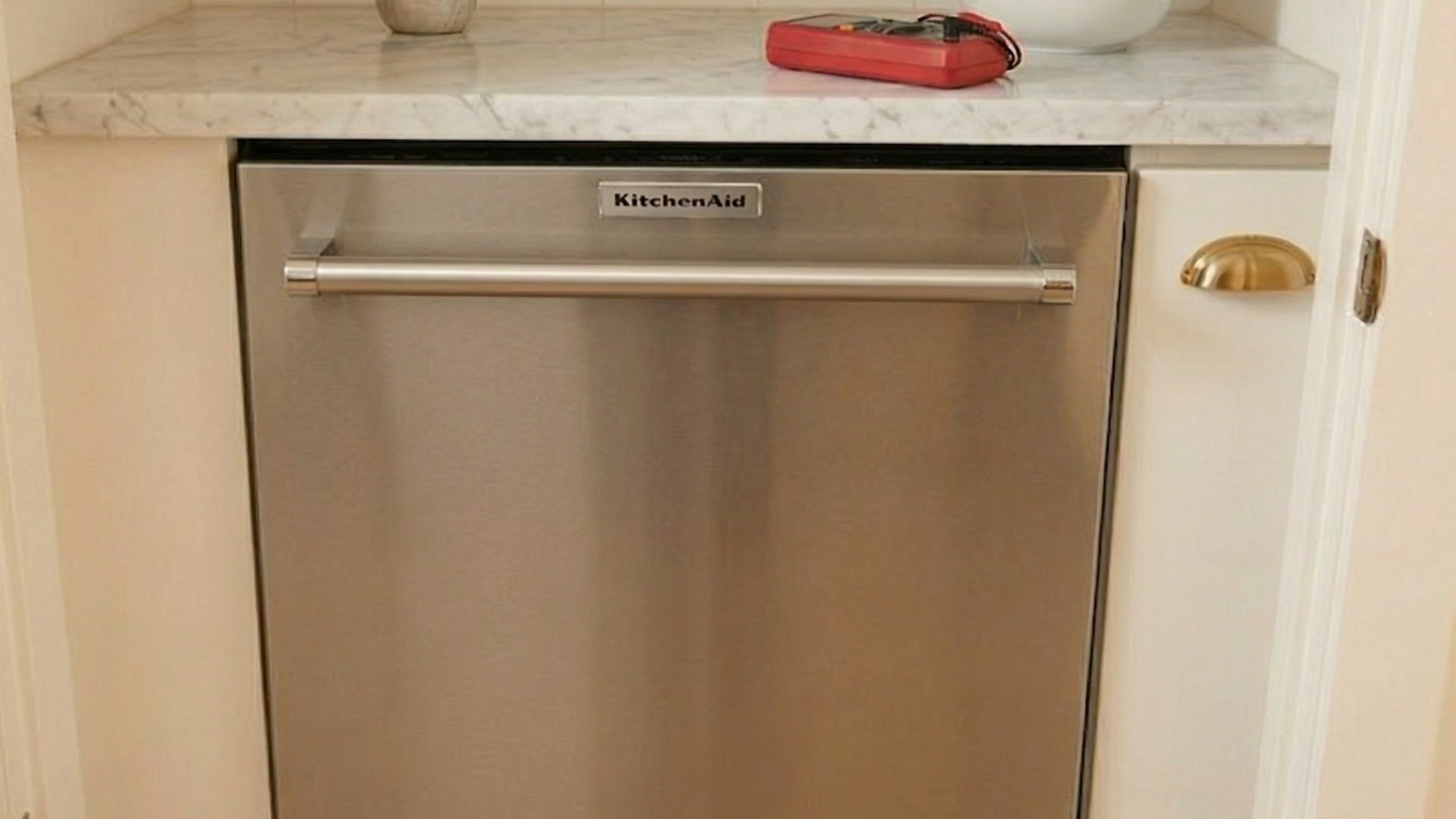
If your KitchenAid dishwasher, whether it is a KDTM404K or another model, keeps leaving food residue or a cloudy white film on your plates, you are not alone. This is one of the more common calls our team takes, and a fair number of these problems trace back to things you can check yourself. At Dan Marc Appliance, we have been factory-authorized to service KitchenAid and the rest of the Whirlpool family since 1984, so here is how we sort out the cause, along with what belongs in a technician’s hands.
1. Food Residue and Grit vs. White Film: Two Different Problems
Before you start, figure out which problem you have. Gritty food residue and cloudy film have different causes and mostly separate fixes.
| Issue | What it looks like | Typical cause | Where to start |
|---|---|---|---|
| Food residue or grit | Stuck-on particles or visible food, often near the bottom or on pots and pans | Loading errors, clogged filter or spray arms, low water temperature, too-short a cycle | Reload correctly, clean the filter and arms, run the hot tap first |
| White film or cloudiness | Surfaces look milky, chalky, or foggy | Hard water minerals, low or empty rinse aid, detergent problems | Fill the rinse aid, run a cleaner cycle, check detergent |
2. Homeowner Troubleshooting
A. Food residue and grit
Check your loading. Leave a few inches between items so water and detergent reach every surface. Do not nest bowls or cups together or pack them too tightly, since that traps food and blocks the spray. Keep tall items from blocking the spray arms or the detergent door.
Inspect the detergent door. Make sure nothing is leaning against it. If a utensil or tall dish blocks the door, the detergent never releases at the right time.
Clean the filter. KitchenAid dishwashers use an upper and a lower filter. Remove both, rinse under hot running water, and use a soft brush for stuck-on soil. Avoid anything abrasive. Cleaning the filter about once a month keeps water flowing properly.
Clear the spray arms. Remove the arms per your owner’s manual and flush the holes, clearing any food or mineral deposits. Give each arm a spin by hand to confirm it rotates freely.
Confirm the water is hot enough. The dishwasher needs incoming water around 120°F to dissolve detergent and cut grease. Run your kitchen tap hot for 30 to 60 seconds before starting the cycle.
Pick the right cycle. Short or express cycles are not built for heavy soil. Use a Normal or Heavy cycle for visibly dirty or baked-on loads, and a high-temperature wash option if your model has one.
B. White film and cloudiness
Hard water is the usual cause. Calcium and magnesium minerals dry onto dishes and glassware, leaving a chalky haze. Fill the rinse aid dispenser and keep it topped up, since rinse aid helps water sheet off instead of drying into spots. Run a monthly cleaning cycle with a dishwasher cleaner or a white vinegar rinse to clear mineral buildup from the tub. If your water tests at 15 grains per gallon or harder, a water softener is recommended.
Check the detergent. Too much detergent can leave a residue, and too little leaves dishes dirty, so measure to the label. Old or clumped detergent will not dissolve well, so replace it if it is stale, and store it sealed in a cool, dry place. Look inside the dispenser for caked-on buildup and wipe it clean.
Confirm water supply and pressure. Weak rinsing can leave residue behind. KitchenAid dishwashers are designed to run on household water pressure in the range of 20 to 120 psi. If pressure seems low, that is worth having checked.
3. When It Is Time for a Technician
If the homeowner checks come up empty, the cause is usually a part in the wash or fill system. These are service-level repairs.
| Problem | What it looks like | Likely fix |
|---|---|---|
| Restricted or failed water inlet valve | Dishwasher fills slowly or not enough to clean | Test and replace the valve |
| Broken detergent dispenser | Soap never releases into the tub during the cycle | Replace the dispenser assembly |
| Faulty wash pump or chopper | Water does not circulate with enough force, leaving residue or film | Inspect and replace the pump or chopper |
4. Quick Reference
| Symptom | Check first | Next step |
|---|---|---|
| Food grit left on dishes | Filter and spray arms | Clean them, then reload properly |
| Milky or cloudy surfaces | Rinse aid level and water hardness | Fill rinse aid, run a cleaner cycle |
| Nothing comes out clean | Water temperature | Run the hot tap first, aim for about 120°F |
| Dishes are wet at the end | Cycle choice | Use a heated-dry cycle with rinse aid |
5. Final Thoughts
Regular filter and spray arm cleaning is the single easiest way to avoid most cleaning problems. Pair that with a quality detergent and rinse aid, and pay attention to your water hardness, since hard water can turn a strong dishwasher into a film maker over time.
If you have worked through these steps and dishes still come out dirty or cloudy, the issue is likely inside the wash system, and that is where our team comes in. Dan Marc Appliance is a factory-authorized KitchenAid servicer with more than 75 certified technicians, an A+ BBB rating, and a 4.7 star average across over 24,000 reviews. We focus on fixing it right on the first visit and offer same-week scheduling across New York, New Jersey, and Pennsylvania. To book a KitchenAid dishwasher repair, call (973) 226-1000 or schedule service online. You can also see everything we service.
For manufacturer resources, KitchenAid’s own dishwasher cleaning and troubleshooting guide and support and parts pages cover model-specific manuals and genuine replacement parts.